Arm Your Compliance Strategy with Actionable Insights

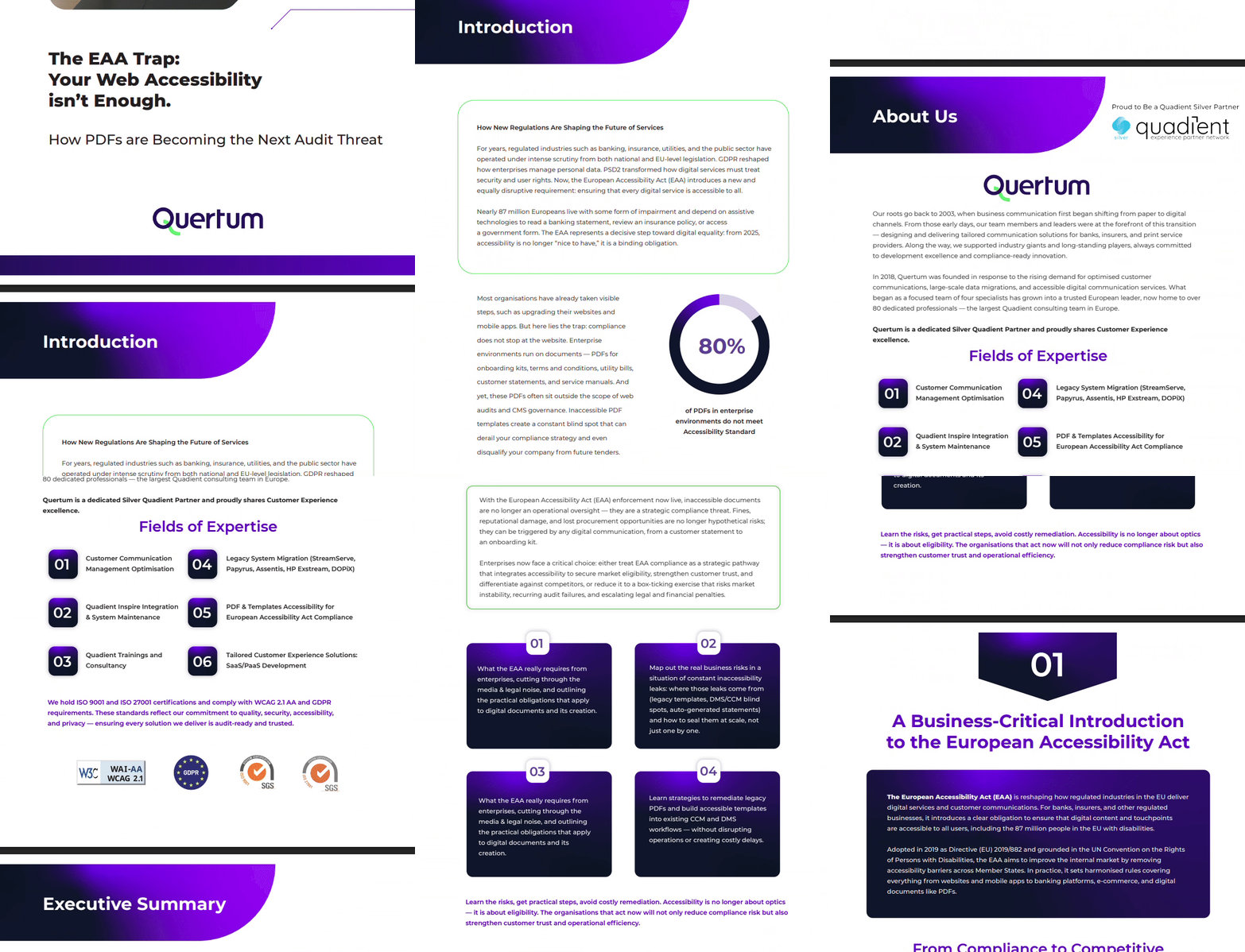
What is Included in the White Paper?
Together, these insights give decision-makers a complete blueprint for turning inaccessible, high-volume document workflows into fully compliant, future-proof, customer-friendly communication ecosystems.

Outlined practical obligations for digital documents based communications
Get a precise breakdown of what the European Accessibility Act requires from organisations that produce customer-facing documents like contracts, statements, bills, policies, onboarding materials, disclosures, and self-service communications.

WCAG 2.1, EN 501 349 and PDF/UA standards and how business should comply with it
The White Paper shows how these standards connect, how they influence each other, and how they convert into real operational decisions across templates, components, metadata, and automated rendering.

Where PDF accessibility breaks, and how to build scalable fixes into Customer Communication workflows
A deep-dive into the hidden failures inside enterprise PDFs. The material shows precisely why these issues happen, how they silently accumulate inside CCM pipelines, and how to eliminate them at scale.

2026 brings consequences for inaccessible documents.
Don’t wait to find out the hard way
In 2026, digital inaccessibility stops being a “nice to fix” issue and becomes a measurable business risk. For organisations built on digital documents like PDFs, forms, statements, applications, the European Accessibility Act changes the equation completely.
The law was designed to close the gap between the 24% of Europeans living with impairments and the essential services they rely on every day: banking, insurance, utilities, and the public sector.
For these industries, inaccessible documents now directly translate into:
- Financial penalties under EAA enforcement
- Erosion of customer trust
- Competitive disadvantage against compliant organisations
And learn how to reach the European Accessibility Act compliance with efficient approach.
Reaching full compliance with the European Accessibility Act isn’t about checking a single box. It’s about aligning three core standards that define, enforce, and operationalise accessibility across all customer communications.
- Unify and organise your efforts on European Accessibility Act Compliance
- Understand complex of accessibility implementation and don’t be misleaded
-